Teacher
Professional
- Messages
- 2,670
- Reaction score
- 814
- Points
- 113
There are a lot of merchs. Their task is to check the payment and accept or not accept it.It is customary to call an online payment system on any website a merchant or simply a merchant in a car. Roughly speaking, this is the very window where you need to enter the data of a plastic card or enter through a payment system account.
Merchs use methods such as AVS (Address Verification Service, or checking the entered billing address), CVV (Card Verification Value, CVV2, CVC2, CID, Verification number - the names are different, but the essence is the same - checking the three or four-digit code on the back of the card), IP / location / BIN match (comparing the location of the buyer's IP address with the location of the card holder. That is, if the card is European, and we use it for the United States, this will raise questions. The IP of Washington looks suspicious, but the time zone of Moscow.
Other verification methods are also used in merch, these are only the most popular.
How to determine which merchant a store is using?
This can usually be identified by the logo in the payment window. Or on the product page. On eBay it looks like this:

Here we can see that eBay is processing payments with a stick merchant. That is, he even processes the cards through a stick and the seller receives the money exactly there.
The site will also help us: https://builtwith.com
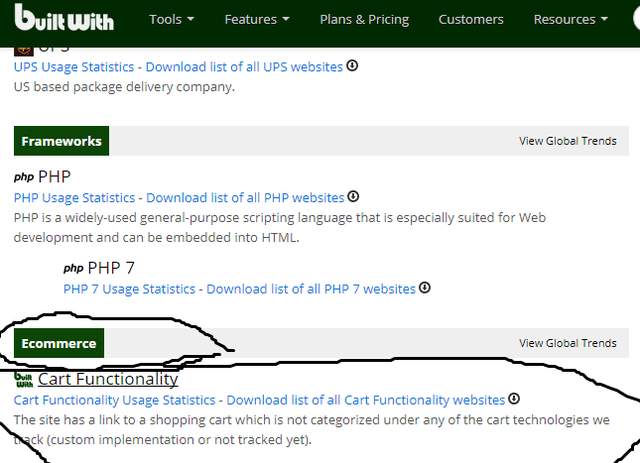
We copy the link of the site we are interested in and look at the eCommerce tab, it looks like this:

We see that the shop https://www.book-pal.com has a Magento merchant.
Also, shops sometimes create a separate page where they describe what kind of merchandise they have and how safe it is (but we know that this is not always the case).
An example of this is https://www.maidstoneharleydavidson.co.uk/pages/online-store/secured-by-sagepay.htm

In this case, the merchant is Sage Pay.
Why is this information needed?
The same merchant evaluates almost the same and makes a decision on the passage of the transaction or refusal. This means that if in one store with a certain merchant with certain system settings, card, IP address, etc. the transaction has passed, it means that it will most likely take place in another store with the same merchant.
Also, according to popular merchants, information is already more or less known about which parameters are important for them, and which are secondary. For the same PayPal, for example, the purity of the IP address (its absence in blacklists) is much more important than geographic compliance. But there are also merchandise where, on the contrary, geographic compliance is an extremely important thing, and in order to successfully make a "purchase" from there, it is imperative to select an IP for the location of the cardholder.
Where can I find information on merchant?
On various carding forums. But no one will give really valuable information for free, and will not even sell it, because what is the point of selling money for money? Therefore, in this regard, it is important to conduct tests yourself. We take a merchant and test different system settings, different material, etc. and see how it gives better. Do not forget to write down and analyze errors.
That's all, giving you merch, bro)