

Carder
Professional
- Messages
- 2,616
- Reaction score
- 2,029
- Points
- 113
In order to use a bank card correctly and without risks, you need to carefully study the rules of the card holder. They are handed out when a new card is received, or they can be found in the public domain on the website of each bank in the "Cards" section. Following the rules and observing all safety requirements, you can not be afraid for the safety of your money on the card account, as well as use all the features of the bank card.
Article content
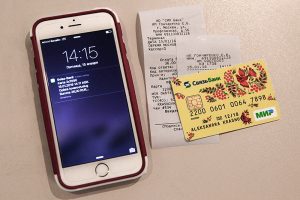
What are the rules for using bank cards?
This is the procedure and conditions for using a card offered by banks (debit or credit). They are general and apply to all types of cards. Each bank has its own rules. When signing an application for the issue or receipt of a plastic card, the client signs the application that he agrees with the terms of issue and the rules for using the card.
The rules themselves are not handed out, since they are painted on several pages. Upon request, employees are required to provide them. You can also download the current rules and study them on the bank's website or at information stands in branches.
What are the Rules for using the cards?
They consist of several sections:
Security measures
To keep your money safe, you need to follow these rules:
Responsibility for violation of the rules
Responsibility lies with the cardholder. In case of violation of the operating conditions, the bank has the right to refuse to reimburse the unauthorized debits that have arisen. For example, money was debited from the card. When clarifying the circumstances, it was revealed that the PIN code was known to the spouse and children, who periodically took money and made purchases. In this case, the bank will refuse to reimburse, citing a violation of the rules for using cards. Refunds will also be denied if it turns out that the client has communicated the card data to third parties by phone or on the Internet.
For the identified violations, the bank can terminate the bank card agreement unilaterally by notifying the borrower through the available communication channels (message, Internet bank).
Thus, observing simple rules, you can use all the features of a bank card without risking yourself and your money.
Article content
- What are the rules for using bank cards?
- What are the Rules for using the cards?
- Security measures.
- Responsibility for violation of the rules.
What are the rules for using bank cards?
This is the procedure and conditions for using a card offered by banks (debit or credit). They are general and apply to all types of cards. Each bank has its own rules. When signing an application for the issue or receipt of a plastic card, the client signs the application that he agrees with the terms of issue and the rules for using the card.
The rules themselves are not handed out, since they are painted on several pages. Upon request, employees are required to provide them. You can also download the current rules and study them on the bank's website or at information stands in branches.
What are the Rules for using the cards?
They consist of several sections:
- Definitions and terms. This section provides an explanation of all the terms that are used when working with maps. For example, who is a cardholder, what is a card account, etc.
- General Provisions. Here the bank explains the general conditions for the provision of a card or refusal to issue, the conditions for activation and establishment / receipt of a PIN code, the validity period of the card, the procedure for debiting money from the card account in the card's currency or in another currency, etc. It also emphasizes that the card can only be used by its owner, and transfer to a third party is prohibited. If desired and possible, the client can issue additional cards to his main card. At the same time, he is obliged to familiarize their owners with the current rules. The client has the right to use and manage the funds in his account using a card. For violation of the rules of use and safety measures, the bank disclaims responsibility for the client's actions.
- Terms of use of PIN-code. It explains what a PIN code is, what it is for, and how to use it. A PIN is the client's consent to carry out an operation: withdraw cash from an ATM or make a purchase. It is strictly forbidden to disclose your PIN-code to third parties. For security reasons, after the third incorrect attempt to enter a PIN, the card is blocked. To unblock it, you will need to come to the bank branch and write an application to unblock it, or do it in your personal account. Banks often issue a sealed PIN when issuing a new card. Some banks practice setting the PIN desired by the client when activating the card on special devices or by phone. The second way is more convenient. With its help, the client can set his usual combination and not remember the imposed PIN-code from the envelope.
- The procedure for conducting card transactions in the merchant. Here are the security measures for conducting transactions at retail outlets. When paying, the cashier has the right to demand identity documents. When buying, it is worth keeping the receipt until the money is debited and the goods are checked. When returning the goods, the debited amount is returned back to the card account.
- The procedure for withdrawing cash from a card at an ATM. It is indicated here that the bank allows you to withdraw / replenish an account using a card at an ATM. In this case, you must carefully follow the instructions of the ATM: pull out the card in a timely manner after the operation, collect money when withdrawing from the bill acceptor, do not enter the PIN code in front of strangers, recalculate the amount received, etc. If the ATM does not work correctly (makes sounds, turns off, hangs), then do not use it.
- The procedure for using maps on the Internet. Since the Internet is not a secure communication channel, it is better to study this point for each bank card holder. If the rules are not followed, you can easily fall for the "bait" of scammers and lose your money. The bank recommends to remember that when paying on sites with a card, you never need to enter a PIN code. If possible, and always better, use 3D-Secure when paying. You shouldn't pay by card on suspicious sites. If it is possible to use the card on the Internet, it is better to get a separate card and transfer to it the amount required for the order. If the attempt is unsuccessful, only the amount that has it will be written off, and the main money will be safe.
- Client's rights and obligations. It states what the client is entitled to and what he must comply with. If the conditions are violated, the bank may refuse to service.
Security measures
To keep your money safe, you need to follow these rules:
- Remember that the card and PIN is the key to the client's account.
- The card must be kept out of the reach of unauthorized persons.
- Do not transfer the card to third parties (including relatives, acquaintances, bank employees).
- Do not provide secret information (PIN, CVV-code, code word). This will be considered a gross violation of the rules for using the card and may result in termination of the card service agreement on the initiative of the bank.
- Do not write the PIN on the card and do not store it with the card.
- Do not enter the PIN code in front of unauthorized persons or at suspicious points of sale. Check the purchase amount carefully on the terminal.
- Do not damage the card, do not store near magnetic objects, do not break, do not scratch. The card is the property of the bank and can be claimed by the bank. Card re-issue due to damage will be paid for its owner.
- If the card is stolen or lost, you should immediately block it. If a card is found, then it can be unlocked, but it is better to reissue a new one. This will help to avoid a situation when the card data has already been received by fraudsters, and they are just waiting for the card to be active again.
- Timely change the card at the end of the validity period. This can be done in a few days. Some banks automatically reissue a new card, but somewhere you need to come to the branch in person and write an application for reissue.
Responsibility for violation of the rules
Responsibility lies with the cardholder. In case of violation of the operating conditions, the bank has the right to refuse to reimburse the unauthorized debits that have arisen. For example, money was debited from the card. When clarifying the circumstances, it was revealed that the PIN code was known to the spouse and children, who periodically took money and made purchases. In this case, the bank will refuse to reimburse, citing a violation of the rules for using cards. Refunds will also be denied if it turns out that the client has communicated the card data to third parties by phone or on the Internet.
For the identified violations, the bank can terminate the bank card agreement unilaterally by notifying the borrower through the available communication channels (message, Internet bank).
Thus, observing simple rules, you can use all the features of a bank card without risking yourself and your money.


