


CarderPlanet
Professional
- Messages
- 2,549
- Reaction score
- 724
- Points
- 113
The seed-sized sensor has amazing accuracy and huge potential.
Scientists at the University of California, Davis have developed an experimental sensor that could lay the groundwork for a new era of millimeter-wave radar.
Millimeter wave radars use fast electromagnetic waves to analyze the movement, position, and speed of objects based on reflected waves. The main advantage of millimeter waves is their high sensitivity to small movements and the ability to capture data from microscopic objects.
The new sensor, thanks to its innovative design, is able to detect vibrations a thousand times smaller, and changes in the position of an object a hundred times smaller than the diameter of a human hair. At the same time, the sensor itself, which is no larger than a sesame seed, is inexpensive to produce and has a long battery life.
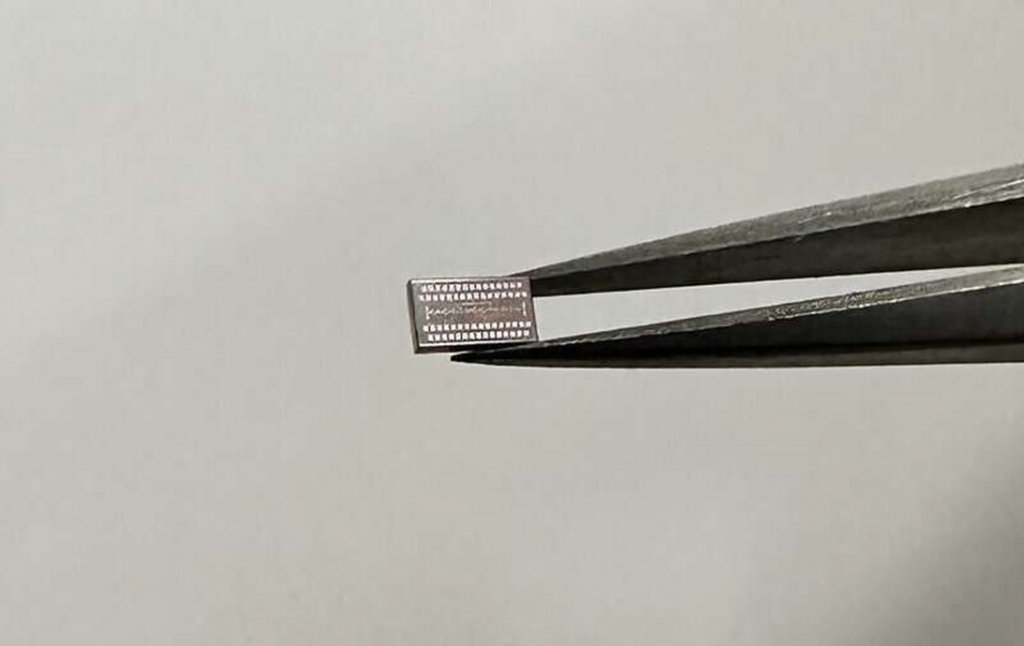
Professor Omid Momeni from the Department of Electrical Engineering and Computer Science at the University of California led the research project. The paper is published in the September 2023 issue of the IEEE Xplore journal.
Working with millimeter waves presents certain difficulties due to the high energy consumption and limited performance of semiconductors at such frequencies. The main problem in the first year of working on the sensor was to determine the desired signal source due to a large amount of interference.
The solution was found by a graduate student, Hao Wang, who suggested using these interferences to suppress them. This approach made it possible to significantly improve the accuracy of the sensor.
The developed chip is easy to manufacture and has a unique design that significantly increases the energy efficiency of the millimeter wave sensor.
The research team plans to further refine its design. They believe that the sensor can be used to monitor the condition of buildings, improve virtual reality and other areas that have yet to be fully realized.
Scientists at the University of California, Davis have developed an experimental sensor that could lay the groundwork for a new era of millimeter-wave radar.
Millimeter wave radars use fast electromagnetic waves to analyze the movement, position, and speed of objects based on reflected waves. The main advantage of millimeter waves is their high sensitivity to small movements and the ability to capture data from microscopic objects.
The new sensor, thanks to its innovative design, is able to detect vibrations a thousand times smaller, and changes in the position of an object a hundred times smaller than the diameter of a human hair. At the same time, the sensor itself, which is no larger than a sesame seed, is inexpensive to produce and has a long battery life.
Professor Omid Momeni from the Department of Electrical Engineering and Computer Science at the University of California led the research project. The paper is published in the September 2023 issue of the IEEE Xplore journal.
Working with millimeter waves presents certain difficulties due to the high energy consumption and limited performance of semiconductors at such frequencies. The main problem in the first year of working on the sensor was to determine the desired signal source due to a large amount of interference.
The solution was found by a graduate student, Hao Wang, who suggested using these interferences to suppress them. This approach made it possible to significantly improve the accuracy of the sensor.
The developed chip is easy to manufacture and has a unique design that significantly increases the energy efficiency of the millimeter wave sensor.
The research team plans to further refine its design. They believe that the sensor can be used to monitor the condition of buildings, improve virtual reality and other areas that have yet to be fully realized.
